Direct book connectionPrivacy and Security
Privacy governs appropriate processing of personal information and effects on people, while security protects information and systems from unauthorized access, change, disclosure, loss, and disruption.
Open article →Direct book connectionSAML
Security Assertion Markup Language is an XML-based standard used to exchange authentication and authorization assertions between an identity provider and a service provider.
Open article →Related topicCIS Critical Security Controls
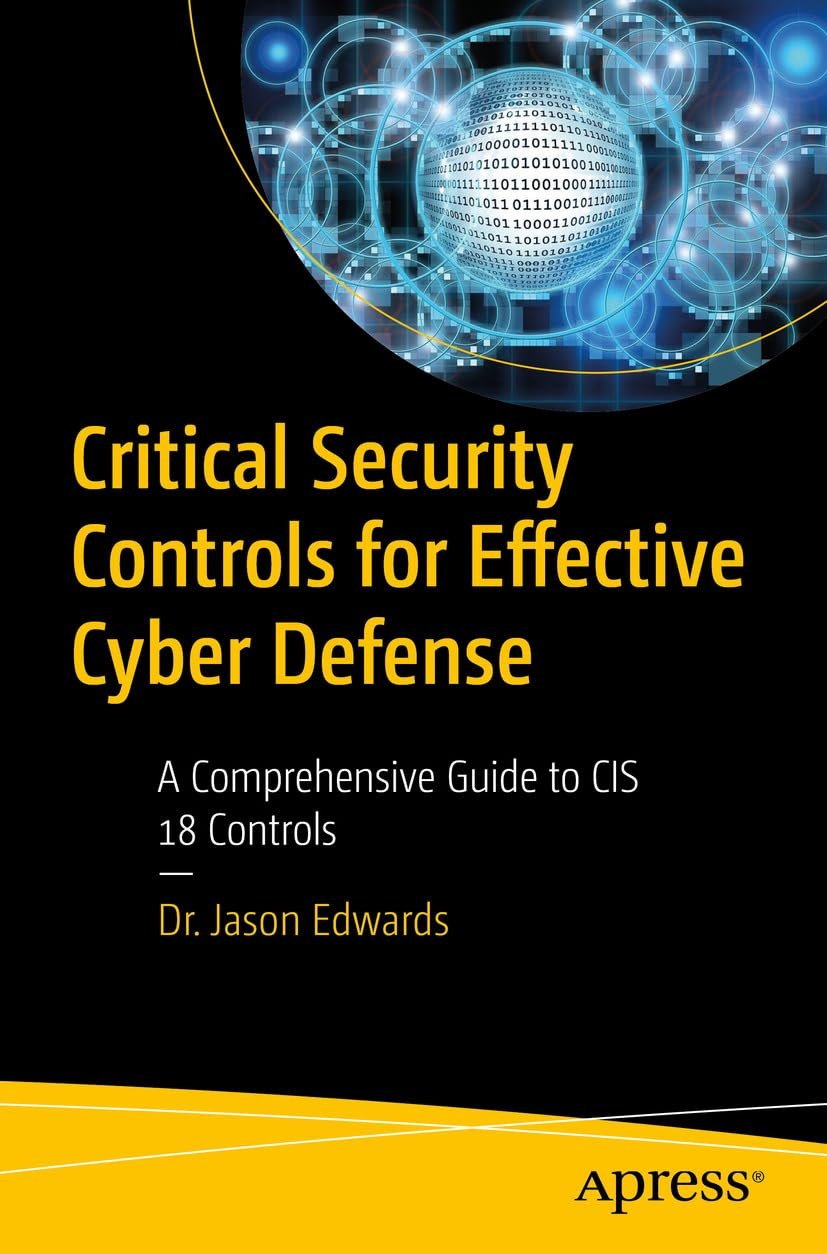
The CIS Controls provide a prioritized set of safeguards that organizations can use to improve defensive capability and reduce common attack paths.
Open article →Related topicCIS Safeguards
CIS Safeguards are specific, actionable practices organized under the CIS Critical Security Controls and prioritized through Implementation Groups.
Open article →Related topicCIS Controls Implementation Groups
CIS Controls Implementation Groups organize safeguards into prioritized sets that reflect organizational resources, complexity, data sensitivity, and threat exposure.
Open article →Related topicCIS Controls Crosswalks
CIS Controls crosswalks map safeguards to requirements or outcomes in other frameworks so organizations can reuse evidence and understand overlapping intent.
Open article →Related topicAsset Inventory
An asset inventory is an authoritative record of the hardware, software, services, cloud resources, data stores, operational technology, and other components the organization must manage and protect.
Open article →Related topicSecure Software Development Lifecycle
A secure software development lifecycle integrates security requirements, design analysis, implementation practices, testing, release controls, and operational feedback throughout delivery.
Open article →Related topicImpair Defenses (Legacy T1562)
Impair Defenses (T1562) is retained as a historical ATT&CK mapping. Enterprise ATT&CK v19.2 reorganized this behavior; use the linked current successor profiles for active catalog mapping.
Open article →Related topicData-Center Physical Security
Data-center physical security layers site boundaries, controlled entry, surveillance, visitor handling, equipment protection, media controls, and emergency procedures around critical infrastructure.
Open article →Related topicIncident Response Objectives
Incident response objectives define the outcomes the team must achieve, such as stopping harm, protecting evidence, sustaining critical services, removing access, and restoring trusted operations.
Open article →Related topicIncident Response Training Program
An incident response training program develops role-specific knowledge, decision skills, tool proficiency, communication habits, and backup coverage for responders and stakeholders.
Open article →