
Put the reading into practice
Practice GIAC GISF concepts
Finished a chapter or review session? Use original BMC questions, study every explanation, earn achievements, and share your progress from the Cyber Challenge.
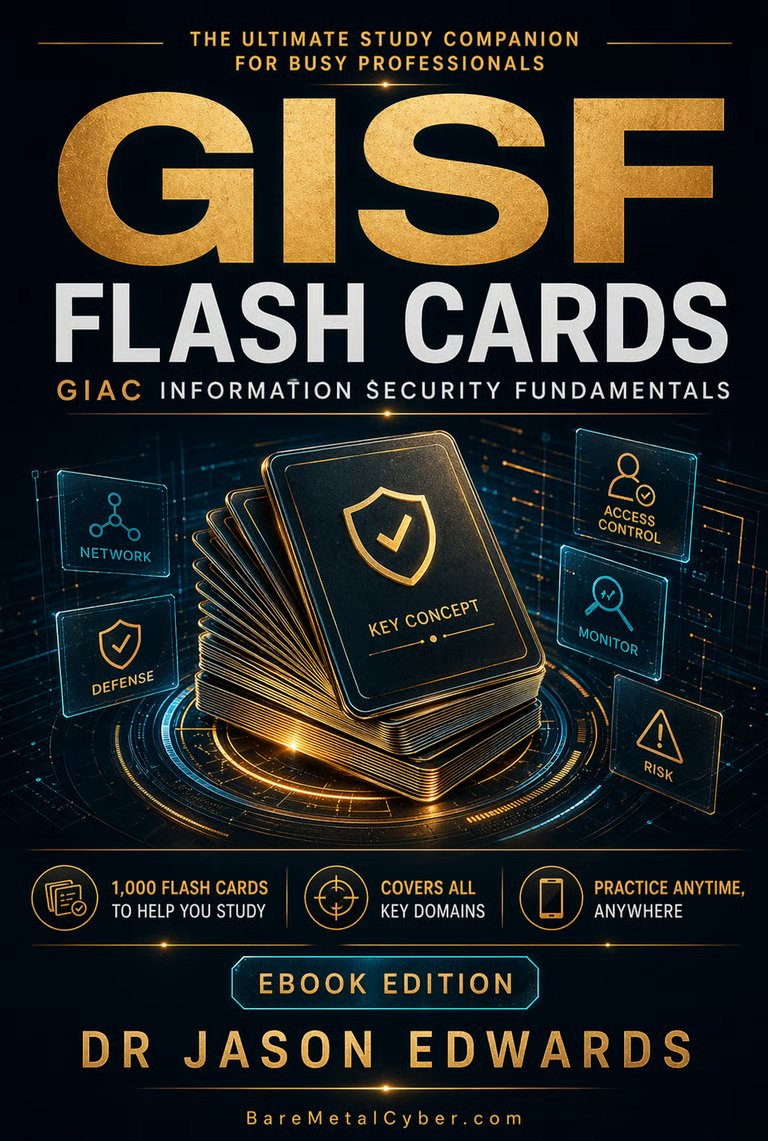
Certification companion
Use the flashcards book for active recall, terminology checks, rapid review, and repeated practice across the course objectives.
Certification names and marks belong to their respective owners. Bare Metal Cyber study resources are independent educational materials and do not imply endorsement.
Companion learning set
Move between the free audio course, structured reading, and active recall instead of treating each resource as a separate product.
Put the reading into practice
Finished a chapter or review session? Use original BMC questions, study every explanation, earn achievements, and share your progress from the Cyber Challenge.
Certification study plan
Use the flashcards after each listening and reading block so recall—not recognition—drives the review.
Choose the lessons for the week, scan the matching book headings, and identify the concepts you expect to learn.
Complete the assigned audio lessons and mark terms, examples, or decisions that need a second pass.
Use the study guide to clarify the lesson, annotate key ideas, and connect related objectives.
Use the flashcards or your own questions before looking at the answer. Separate strong topics from weak ones.
Open the linked Cyber Wiki articles, revisit missed lessons, and repeat difficult cards until you can explain the concept clearly.
The schedule is Bare Metal Cyber editorial guidance. Adjust the pace for your exam date, prior experience, and practice-test results.