Foundations, Problem Framing and Data
Orientation: How to Learn AI by Listening
This opening episode sets the foundation for the entire PrepCast by guiding learners on how to approach the subject of artificial intelligence in an audio-first format.…
Bare Metal Cyber · Free, ad-free audio course
A structured, audio-first learning route for Advanced AI, designed for focused review and practical understanding.
Complete Lesson Directory
Search by topic or narrow the directory by exam domain. Courses with multiple editions are organized below so every season remains easy to find. Each lesson includes its own audio player, full description, transcript when available, and previous-or-next navigation.
50 lessons available
Foundations, Problem Framing and Data
This opening episode sets the foundation for the entire PrepCast by guiding learners on how to approach the subject of artificial intelligence in an audio-first format.…
Foundations, Problem Framing and Data
This episode introduces the learner to the essential definitions and scope of artificial intelligence, a foundational step in any exam or certification path.…
Foundations, Problem Framing and Data
This episode provides context for the development of artificial intelligence by tracing its history across cycles of optimism, disappointment, and eventual breakthroughs.…
Foundations, Problem Framing and Data
This episode introduces the structural mechanics of AI systems, breaking them into three interrelated components: data, models, and feedback loops. Data is the raw material, collected and processed into training sets that shape model behavior.…
Foundations, Problem Framing and Data
This episode serves as a glossary immersion, focusing on the terminology that certification candidates will encounter repeatedly in AI-related exams.…
Foundations, Problem Framing and Data
This episode examines the main types of artificial intelligence, clarifying distinctions that are essential for both exams and real-world comprehension.…
Foundations, Problem Framing and Data
This episode introduces problem framing, the skill of converting a business or operational goal into a question that an AI system can realistically address.…
Foundations, Problem Framing and Data
This episode explores the critical role of data in artificial intelligence, focusing on collection, labeling, and quality considerations.…
Foundations, Problem Framing and Data
This episode introduces the concept of data bias, a topic that often appears in certification exams because of its impact on fairness, accuracy, and compliance.…
Machine Learning Foundations
This episode explains supervised learning, one of the most fundamental approaches in machine learning and a cornerstone for certification exams. Supervised learning relies on labeled datasets where each input is paired with a correct output.…
Machine Learning Foundations
This episode introduces unsupervised learning, a key machine learning paradigm that does not rely on labeled data. Instead of mapping known inputs to known outputs, unsupervised methods search for patterns, groupings, or structures hidden in raw datasets.…
Machine Learning Foundations
This episode introduces reinforcement learning, often considered the third major paradigm of machine learning.…
Machine Learning Foundations
This episode addresses model evaluation, a core competency for certification exams. While accuracy is the simplest metric, it is not always sufficient, especially when dealing with imbalanced datasets.…
Machine Learning Foundations
This episode explains overfitting, one of the most important pitfalls in machine learning. Overfitting occurs when a model memorizes training data so closely that it fails to generalize to new, unseen cases.…
Machine Learning Foundations
This episode introduces feature engineering, the process of transforming raw data into meaningful inputs that improve model performance.…
Machine Learning Foundations
This episode reviews the transition from expert systems, which dominated AI development in the 1970s and 1980s, to the rise of machine learning approaches that define the field today.…
Deep Learning and Generative AI
This episode introduces deep learning, a subset of machine learning that relies on neural networks with many layers to learn complex representations of data.…
Deep Learning and Generative AI
This episode explores computer vision, the field of AI that enables systems to interpret and analyze visual data. At the most basic level, digital images are arrays of pixels, each containing color or intensity values.…
Deep Learning and Generative AI
This episode introduces the fundamentals of speech and audio AI, covering three main areas: speech-to-text (STT), text-to-speech (TTS), and speaker identification. STT systems convert spoken language into written text, supporting applications like transcription and voice assistants.…
Deep Learning and Generative AI
This episode covers the foundations of natural language processing (NLP) before the rise of large language models. Early NLP techniques relied heavily on statistical and rule-based methods, including bag-of-words, term frequency–inverse document frequency (TF-IDF), and n-gram models.…
Deep Learning and Generative AI
This episode introduces transformers, the architecture that underpins nearly all state-of-the-art AI systems today. Instead of relying on recurrent layers or convolutional patterns, transformers leverage the mechanism of attention to weigh relationships between tokens in a sequence.…
Deep Learning and Generative AI
This episode focuses on large language models (LLMs), which have moved from research labs into mainstream applications.…
Deep Learning and Generative AI
This episode examines prompting, the method of steering model outputs with well-designed instructions. For certification purposes, prompting fundamentals matter because exams often test whether learners can identify effective approaches or troubleshoot poor results.…
Deep Learning and Generative AI
This episode introduces retrieval-augmented generation, or RAG, a method of enhancing large language models by grounding them in external data sources.…
Deep Learning and Generative AI
This episode explains embeddings, numerical representations of text, images, or other data that capture semantic meaning. Embeddings allow AI systems to compare similarity and retrieve related items based on meaning rather than exact matches.…
Deep Learning and Generative AI
This episode expands the scope of generative AI beyond text, exploring how similar principles apply to images, audio, and video. Models trained on large datasets of visual or auditory information can create synthetic media that looks and sounds remarkably realistic.…
Responsible Delivery and AI Operations
This episode focuses on safety, bias, and fairness, essential dimensions of responsible AI development. Safety refers to preventing harmful or unpredictable behavior. Bias occurs when models inherit unfair patterns from training data, producing skewed outcomes.…
Responsible Delivery and AI Operations
This episode addresses explainability and transparency, two qualities increasingly demanded of AI systems. Explainability refers to the ability to clarify how a model reached a decision, while transparency involves openness about system design, data use, and limitations.…
Responsible Delivery and AI Operations
This episode introduces the human-in-the-loop approach, where human oversight complements automated AI processes. Instead of leaving systems to operate entirely on their own, humans provide feedback, corrections, and judgment in critical points of the workflow.…
Responsible Delivery and AI Operations
This episode examines the journey from experimental AI prototypes to fully deployed production systems, emphasizing that success requires more than technical accuracy. Productizing AI involves integration into workflows, scaling for reliability, and ensuring maintainability.…
Responsible Delivery and AI Operations
This episode introduces MLOps, the discipline of applying operational best practices to machine learning systems. While data science focuses on building models, MLOps ensures they can be deployed, maintained, and monitored reliably in production.…
Responsible Delivery and AI Operations
This episode covers data privacy and governance, critical areas for both ethical practice and regulatory compliance. Data privacy refers to protecting individual information from misuse, while governance involves managing data with policies, standards, and oversight.…
Responsible Delivery and AI Operations
This episode introduces the security challenges unique to artificial intelligence systems. Unlike traditional software, AI models can be attacked through their training data, architecture, or outputs.…
Responsible Delivery and AI Operations
This episode covers the legal and policy environment surrounding AI, an area increasingly tested in certification exams. Copyright concerns arise when models are trained on copyrighted material, raising questions about fair use and derivative works.…
Responsible Delivery and AI Operations
This episode addresses the critical task of evaluating AI systems beyond raw performance metrics. While accuracy and loss functions matter during development, organizations ultimately need to measure value — the tangible impact of AI on business or mission outcomes.…
Responsible Delivery and AI Operations
This episode examines change management in the context of AI adoption. AI systems are not just technical tools but organizational shifts, and their success depends heavily on how teams accept and integrate them.…
Responsible Delivery and AI Operations
This episode explores the organizational roles necessary for building and sustaining AI systems. Teams often include data scientists, data engineers, machine learning engineers, product managers, ethicists, and business stakeholders.…
Applied AI and Decision Intelligence
This episode examines AI in customer support, one of the most common enterprise applications. Chatbots and virtual agents handle routine inquiries, while escalation paths route complex cases to human representatives.…
Applied AI and Decision Intelligence
This episode explores how AI transforms marketing and sales functions through personalization and scoring. Personalization involves tailoring recommendations, messages, or offers based on customer data.…
Applied AI and Decision Intelligence
This episode addresses AI in operations and IT, focusing on forecasting and anomaly detection. Forecasting uses historical patterns to predict future values, such as demand or resource usage.…
Applied AI and Decision Intelligence
This episode explores the growing role of AI in cybersecurity, where the scale and speed of modern threats demand advanced detection and automation. AI techniques support intrusion detection, malware classification, phishing analysis, and anomaly monitoring.…
Applied AI and Decision Intelligence
This episode addresses the unique challenges of deploying AI in safety-critical sectors such as healthcare and finance. In these domains, errors can cause significant harm, from misdiagnosis in medicine to systemic risks in financial markets.…
Applied AI and Decision Intelligence
This episode explores edge and on-device AI, where models run locally on hardware rather than in centralized cloud servers.…
Applied AI and Decision Intelligence
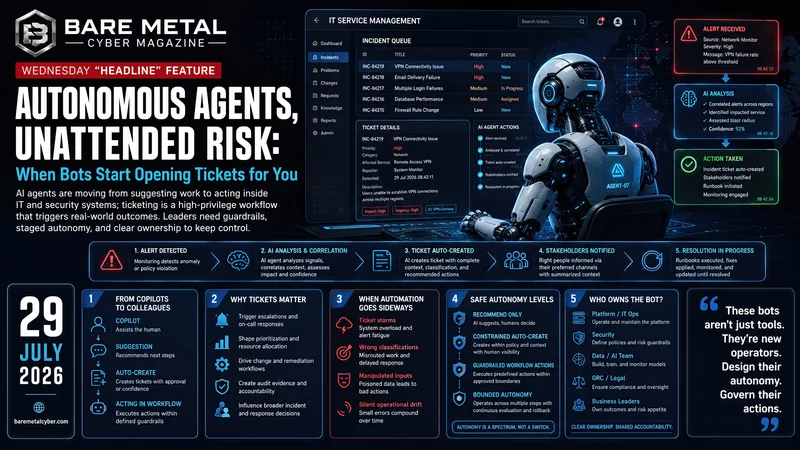
This episode examines AI agents, which extend models beyond text generation into action. Agents use planning and tool integration to execute tasks on behalf of users, such as querying databases, calling APIs, or chaining steps to solve complex problems.…
Applied AI and Decision Intelligence
This episode focuses on embedding ethics into AI development through practical guardrails. While high-level principles such as fairness and accountability provide guidance, practitioners need concrete methods to implement them in projects.…
Applied AI and Decision Intelligence
This episode explores the realities of working with AI vendors, a critical skill as few organizations build every component in-house. Vendor relationships require careful evaluation of offerings, service-level agreements (SLAs), and long-term commitments.…
Applied AI and Decision Intelligence
This episode introduces recommender systems, one of the most visible applications of AI in daily life. Recommenders filter and rank content or products based on user preferences, behaviors, and similarities across populations.…
Applied AI and Decision Intelligence
This episode explains time series analysis and forecasting, which focus on predicting values that evolve over time. Key concepts include trends, which capture long-term movements; seasonality, which reflects repeating cycles; and drift, which occurs when patterns change unexpectedly.…
Applied AI and Decision Intelligence
This episode introduces causal inference, which seeks to determine not just correlations but true cause-and-effect relationships.…
Applied AI and Decision Intelligence
This episode covers optimization and decision intelligence, which focus on choosing the best possible actions under constraints. Optimization techniques such as linear programming define objectives and constraints mathematically, allowing systems to find efficient solutions.…
Try another term or clear one of the filters.
A Practical Study Routine
Use the free audio course during a commute, walk, workout, or focused study session.
Follow the course with your own notes and use the related Cyber Wiki entries for additional context.
Return to difficult lessons and search the site for related concepts, examples, and explanations.
Related Magazine Features
Related Cyber Wiki
An AI agent selects actions and invokes tools, services, or workflows to pursue a goal across multiple steps.
AI auditAI audit overreliance safeguards keep auditors responsible for scoping, evidence evaluation, judgment, challenge, and conclusions even when AI performs analysis or drafting.
AI data engineeringAI data preparation collects, cleans, labels, transforms, and partitions information for development and evaluation.
AI privacy governanceAI data-rights and deletion processes handle access, correction, objection, restriction, portability, and erasure across datasets, models, embeddings, caches, logs, and derived outputs.
AI assurance engineeringAI evaluation pipelines run repeatable tests against model quality, safety, security, fairness, robustness, and operational requirements.
AI operationsAI feedback loops occur when a system's outputs influence the future data used to evaluate or retrain it.