Lesson Focus
What this lesson covers
Listen to Translate cyber threat intelligence into prioritized detections and response decisions in the GIAC GSOM audio course.
Complete course · Course Lessons · S01E06
Listen to Translate cyber threat intelligence into prioritized detections and response decisions in the GIAC GSOM audio course.
Listen Now
Lesson Focus
Listen to Translate cyber threat intelligence into prioritized detections and response decisions in the GIAC GSOM audio course.
Companion Books
Use the study guide to organize the ideas from the audio lesson, then use the flashcards book for active recall and rapid review.
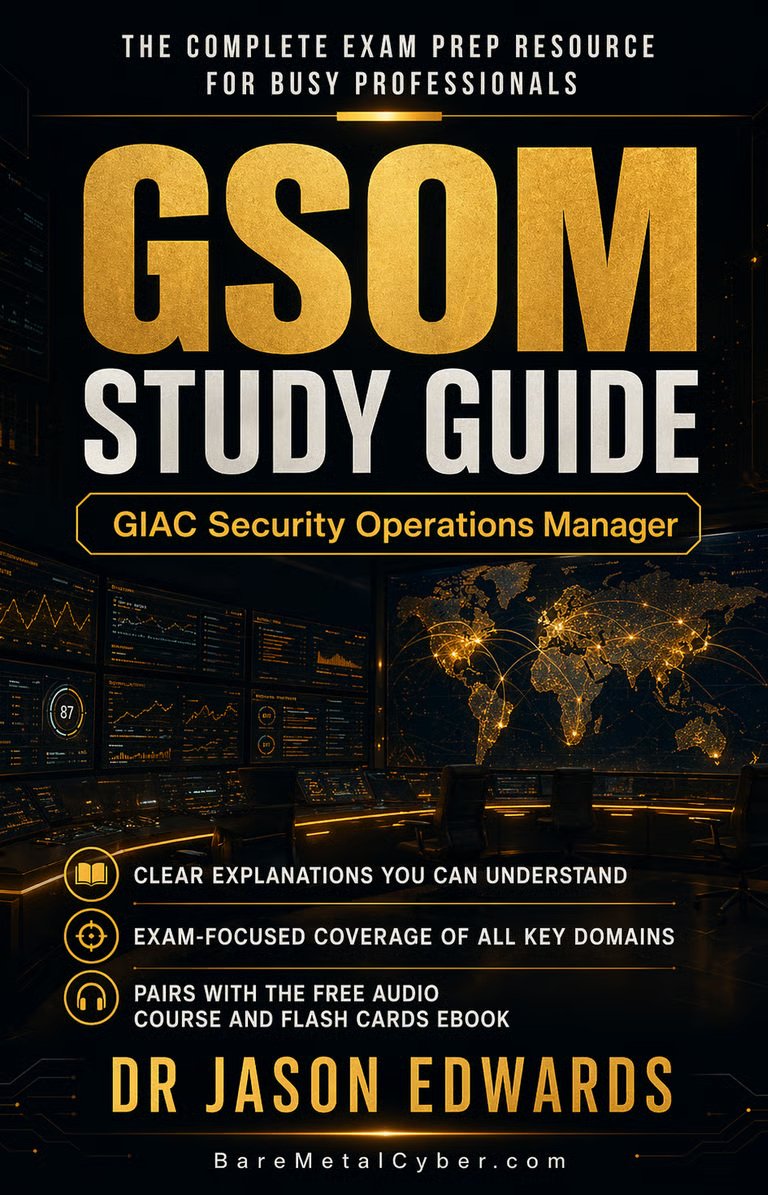
Study Guide
Use the companion study guide to organize the material, compare important concepts, annotate key ideas, and build a written reference for review.
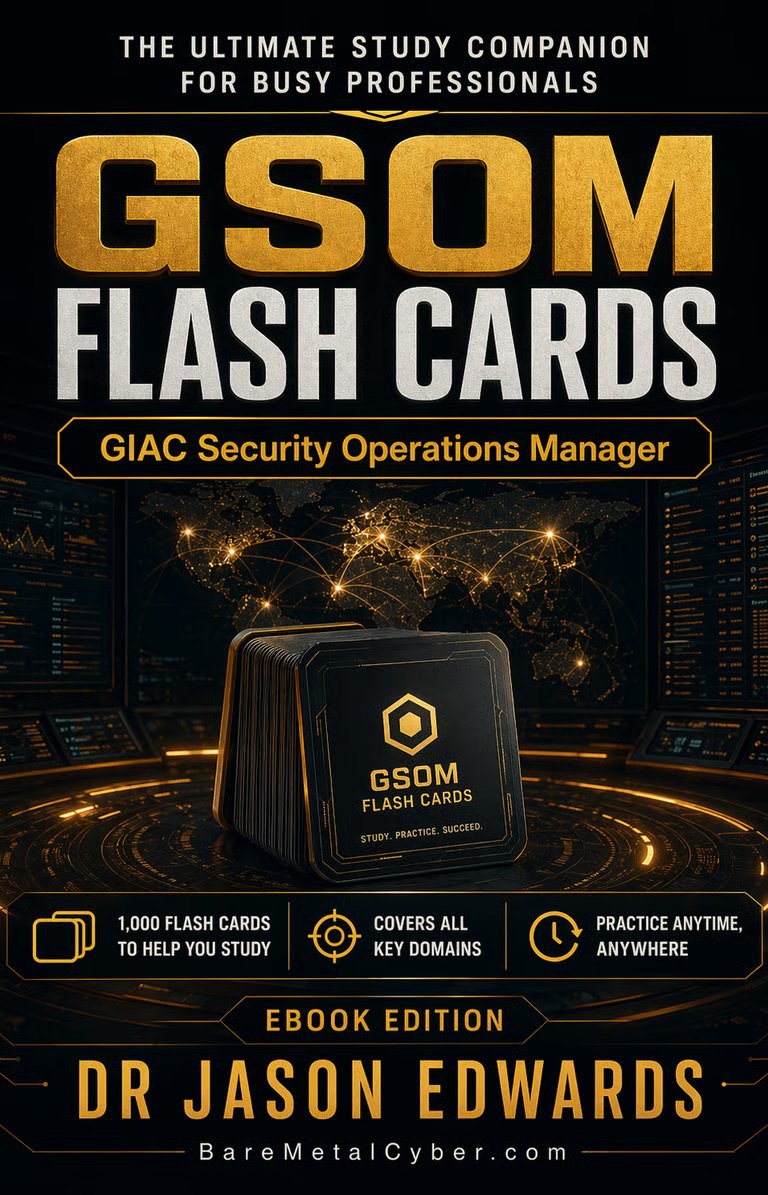
Flashcards Book
Use the flashcards book for active recall, terminology checks, rapid review, and repeated practice across the course objectives.
Before we continue, a quick note: this audio course is a companion to our course companion books. The first book is about the exam and provides detailed information on how to pass it best. The second book is a Kindle-only eBook that contains 1,000 flashcards that can be used on your mobile device or Kindle. Check them both out at Cyber Author dot me, in the Bare Metal Study Guides Series.
Start with the basic idea that intelligence is not the same as evidence, and confusing those two causes a lot of mistakes. Intelligence is information that suggests what might be happening or what could happen, based on observed patterns. Evidence is information that supports what is actually happening in your environment right now. Threat intelligence helps you focus your attention and prepares you to recognize meaningful activity earlier, but it does not automatically prove that your organization is being attacked. That distinction matters because it shapes response, since overreacting to intelligence can waste resources and disrupt normal operations, while ignoring it can leave you unprepared. A strong security operations mindset uses intelligence to form hypotheses, then uses data and investigation to confirm or reject those hypotheses. That is the translation bridge between outside information and internal action.
Related Magazine Features